
Selected publications
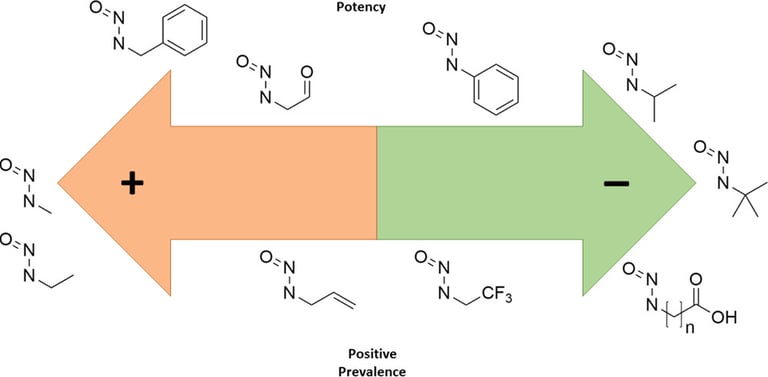
What makes a potent nitrosamine?
Although most nitrosamines are carcinogenic their potency varies wildly. This makes setting safe limits for novel nitrosamines extremely challenging. While different features were expected to impact the potency this has been difficult to quantify. In this work a Bayesian model capable of untangling the effects of multiple simultaneous features on a compounds potency was developed. By doing so it is possible to provide a measure of confidence to what was previously only intuition. https://doi.org/10.1021/acs.chemrestox.2c00199
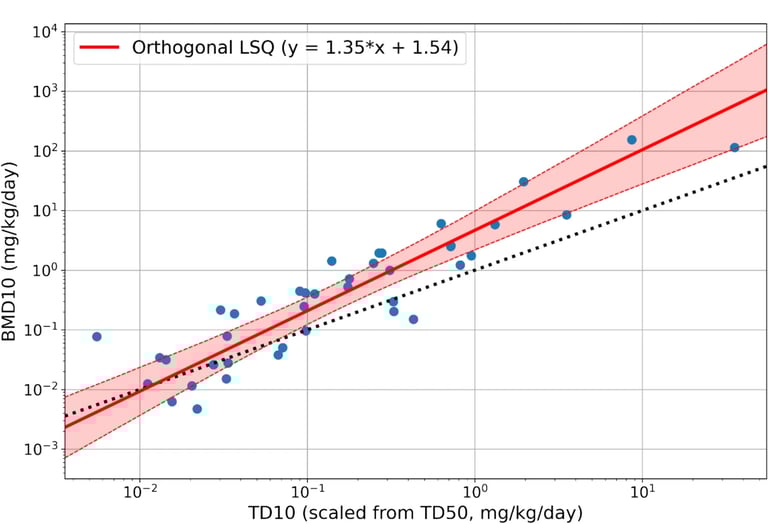
A critical comparison of BMD and TD50 methods
The TD50 is perhaps the traditional measure of carcinogenic potency. Despite its wide use the method is starting to show its age and is unable to account for a number of processes which may lead to non-linear responses. BMD models have been developed to address the shortcomings of the TD50 method but their adoption has been slowed by a lack of historical data. In this work the potency of approximately 50 compounds of interest was calculated using each method and compared. This shows that while there is significant individual variation the aggregate values align well. https://doi.org/10.1007/s00204-024-03951-8
Using parametric methods to improve class potency estimation
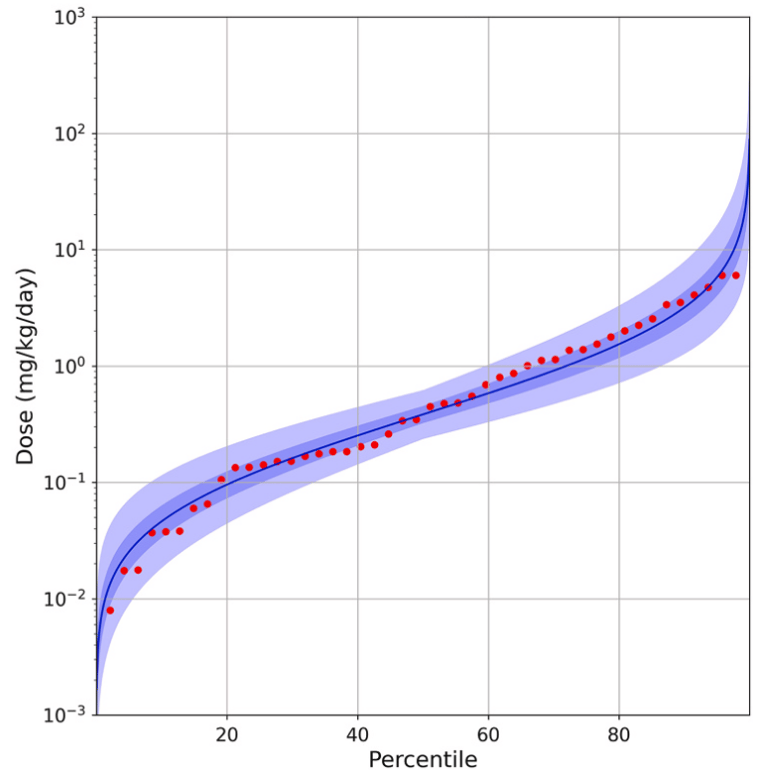
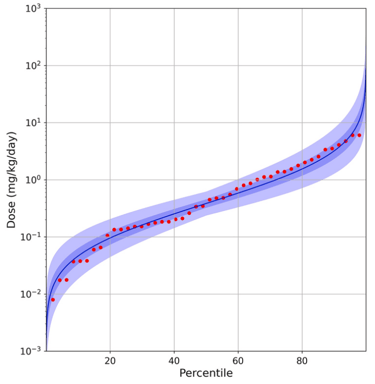
When setting a limit for a class of compounds its common to use a percentile of the potencies as the overall class potency, this ensures a safe limit with a given confidence. However there are many methods for percentile estimation and common tools often don't describe the process they use. By using the underlying distribution of potencies it is possible to derive a reproducible limit and provide confidence in the result. https://doi.org/10.1016/j.yrtph.2021.104875
Contact information
Contact us for tailored data-based insights.
rob.thomas@artoxconsulting.co.uk
© 2026. All rights reserved.